
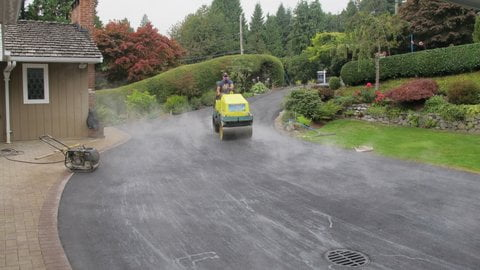
Driveways are one of the most heavily used “structures” on a residential property, and mistakes are expensive to undo. Homeowner remodeling data shows exterior projects remain among the most common upgrades, with driveway and hardscape work often bundled into broader curb-appeal and outdoor living investments (Harvard Joint Center for Housing Studies, 2024). In 2026, material costs, storm water rules, and climate-driven freeze-thaw stress are pushing more homeowners to plan smarter, not just spend more.
This guide breaks down what actually determines performance and cost in a driveway installation, from base preparation and drainage to choosing between an asphalt driveway and a concrete driveway. You will also learn how to vet a driveway contractor, when to repave driveway surfaces versus rebuild, and what 2026 trends mean for residential paving decisions.
1) Start with site conditions: soil, slope, drainage, and climate
The #1 predictor of driveway longevity is not the surface you pick. It is the condition of what is underneath and around it. A beautiful asphalt or concrete top layer will fail early if the subgrade is unstable, water is trapped, or frost heave is ignored.
Soil type and subgrade stability
Clay-heavy soils hold water and expand, while sandy soils drain but can shift if not compacted properly. A competent driveway contractor will evaluate subgrade and recommend stabilization when needed, such as geotextile fabric, thicker aggregate base, or undercut and replacement. Compaction is measurable, and you should ask how the crew verifies it (plate compactor passes, roller type, proof-rolling, and lift thickness).
Slope and water management
Driveways should shed water away from garages and foundations. Even modest slope problems can create ponding that accelerates cracking, scaling, and base erosion. Storm water expectations are also tightening in many municipalities, with greater use of trench drains, swales, permeable sections, and on-site infiltration to reduce runoff during heavy rain events.
Freeze-thaw and heat stress (why 2026 planning matters)
Recent years have brought more weather volatility and extreme precipitation in many regions, which increases the need for robust drainage and thicker bases. In freeze-thaw zones, water trapped below the slab or asphalt can heave surfaces and create voids. In hotter climates, asphalt softening and rutting risk increases if the mix design and base are not matched to loads.
2) Choose the right surface: concrete driveway vs asphalt driveway vs alternatives
Surface selection should match your climate, traffic, maintenance preferences, and curb-appeal goals. Cost matters, but focusing only on the initial price often leads to higher lifetime costs.
Key benchmarks homeowners should know
Concrete’s compressive strength commonly ranges around 3,000 to 4,000 psi for residential flatwork depending on specification, climate exposure, and mix design (ACI, 2023). In freeze-thaw regions, air entrainment and curing practices can be the difference between a long-lasting surface and premature scaling.
For asphalt, mix design and thickness should match use. A light-duty driveway for passenger vehicles differs from a driveway that regularly sees delivery trucks, RVs, or trailers. If heavy loads are expected, insist your driveway contractor designs the section accordingly.
Quick comparison table (2026 planning view)
| Option | Best for | Typical maintenance | Common failure mode if built wrong |
|---|---|---|---|
| Asphalt driveway | Fast installs, cold climates, easier spot repairs | Sealcoat cycles, crack filling, edge support | Rutting, alligator cracking from weak base |
| Concrete driveway | Long-term durability, decorative finishes | Joint care, occasional sealing, de-icing discipline | Scaling, random cracking from poor joints/curing |
| Permeable systems | Runoff reduction, drainage-limited sites | Vacuum sweeping, clog prevention | Clogging, settlement from incorrect base gradation |
3) Base design and thickness: where driveway installations win or fail
If you want a driveway that performs for decades, treat the base like the product and the surface like the finish. Many premature failures tie back to insufficient excavation depth, poor aggregate quality, or inadequate compaction.
Thickness should match loads, not guesses
A driveway that only sees sedans can be designed differently than one that sees repeated deliveries or a heavy pickup. Choosing between asphalt and concrete driveways also plays a major role in how well the surface handles long-term vehicle loads and weather exposure. National freight data continues to show elevated home delivery volumes compared to pre-2020 patterns, meaning many residential driveways now see more frequent medium-duty truck loading than they were originally built for (U.S. Bureau of Transportation Statistics, 2024). In 2026, it is smart to plan for heavier loading even if you do not personally drive a truck.
4) Drainage, grading, and storm water compliance (a major 2026 driver)
Water is the hidden force behind most driveway distress. It weakens subgrade, washes out fines, and in freezing climates, expands and heaves. Planning drainage upfront is typically far cheaper than retrofitting after settlement and cracking begin.
Permeability and runoff expectations
Many jurisdictions now emphasize runoff reduction, especially where flooding has increased. Climate assessments continue to show that heavy precipitation intensity has risen in many U.S. regions over recent decades (U.S. Global Change Research Program, 2023). In practical terms, that means more homeowners are being asked to manage water on-site, and permeable paving, infiltration zones, and thoughtful grading are becoming mainstream in residential paving.
Edge case: sloped driveways and winter icing
If your driveway is steep, surface selection and texture matter. Broom-finished concrete or textured pavers can improve traction, and drainage details must prevent sheet ice. Also consider where snow will be stored so plows do not damage edges, and so meltwater does not refreeze across the main travel path.
5) Budget, lifecycle cost, and when to repave driveway vs rebuild
Homeowners often ask, “How much does a driveway installation cost?” The more useful question is, “What will it cost over the next 10 to 25 years?” In 2026, labor availability and petroleum-linked inputs can swing asphalt pricing, while cement and admixture costs influence concrete. Planning with lifecycle cost reduces the chance of paying twice.
Simple decision rule you can use
If you have large sections that rock under load, standing water that never dries, or cracks that form connected “alligator” patterns, expect base problems. In those cases, resurfacing is usually a short-term cosmetic fix. A qualified driveway contractor should be willing to explain why a repave driveway recommendation is technically sound, not just cheaper today.
ROI reality check (curb appeal still matters)
Exterior improvements remain strongly associated with perceived home value. Remodeling research consistently ranks exterior upgrades as meaningful for resale appeal, and appraisers and buyers often notice driveway condition immediately (National Association of Realtors, 2024). Even if you are not selling, a properly built driveway reduces maintenance headaches and improves daily usability.
6) Picking the right driveway contractor: specs, warranties, and quality controls
The best material installed poorly will fail. The best contractor can often make “standard” materials perform exceptionally well. In 2026, the gap between high-quality and low-quality residential paving has widened because crews vary dramatically in training, process discipline, and scheduling pressure.
Quality signals that correlate with better outcomes
Warranties vary widely and often exclude cracking, which is why the written spec matters. Ask what is covered, for how long, and what maintenance you must perform. A credible driveway contractor will also tell you what would void coverage, such as heavy trucks, snowplow damage, or deicers on fresh concrete.
7) 2026 trends and recent changes impacting residential paving decisions
Driveway planning is not static. The “right” driveway installation in 2026 considers shifting weather patterns, evolving storm water expectations, and more frequent heavy vehicle loading from deliveries and home services.
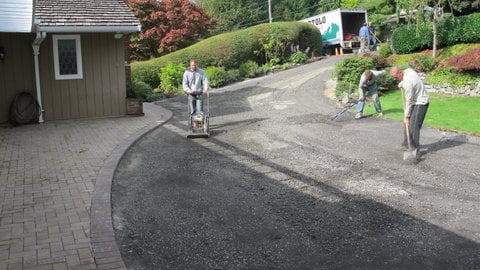
Trend: better drainage and permeable options
More homeowners are adopting hybrid designs: impermeable driving lanes paired with permeable borders or infiltration strips. This can reduce runoff without forcing a fully permeable system. It also helps if your site has problem areas where water collects near the garage.
Trend: higher expectations for mix design and durability
Concrete suppliers increasingly tailor mixes for exposure conditions, using air entrainment, supplementary cementitious materials, and admixtures to improve durability. Asphalt producers similarly optimize mixes for rut resistance and workability. The practical takeaway is to avoid “one-size-fits-all” bids and ask what mix is being used and why.
Trend: smarter project planning and documentation
Homeowners are documenting pre-existing conditions, utilities, and drainage paths more often before construction starts. This helps prevent disputes and speeds up decisions if surprises happen, such as soft spots or buried debris. A simple phone video walkthrough plus marked-out utility locates can save days of confusion.
8) Common mistakes to avoid (and pro tips that save money)
Most driveway regrets come from shortcuts that looked “fine” at install time. Use this section as a pre-install checklist so your driveway installation holds up under real use.
Real-world scenario: the “looks great, fails fast” driveway
A common failure we see in residential paving is a fresh overlay placed over an unstable base. It looks perfect for one season, then reflective cracking returns and low spots reappear. When the underlying structure is moving, the surface is only a mirror of that movement.
Conclusion: plan the structure, not just the surface
A successful driveway installation comes down to engineering basics and disciplined execution. If you get the base, drainage, and specs right, the surface choice becomes much less stressful.
If you are planning residential paving and want a driveway that looks great and performs for the long haul, Bortolo Paving can help you evaluate your site, compare options, and build a scope that protects your investment. Next step: measure your driveway, note drainage problem areas after the next rainfall, and schedule a professional assessment before you finalize materials or budget.
Frequently asked questions
How long does a typical driveway installation take in 2026?
Most residential driveway installations take 1 to 5 working days depending on excavation, base work, drainage features, and surface type. Asphalt is often usable sooner, while concrete requires more curing time before heavy loads. Weather delays are still common, so build in schedule flexibility.
Should I choose an asphalt driveway or a concrete driveway?
Choose based on climate, maintenance tolerance, budget, and aesthetics. Asphalt can be easier to repair and is common in cold climates, while concrete can offer longer-term durability and decorative options when properly jointed and cured. Your driveway contractor should justify the recommendation based on site drainage and expected loads.
When should I repave driveway surfaces instead of rebuilding?
Repaving can work when the base is stable and distress is mostly surface aging. If you have widespread alligator cracking, pumping, or recurring settlement, resurfacing is usually temporary. A contractor should evaluate subgrade and drainage before recommending an overlay.
What thickness should my driveway be for regular delivery trucks?
Thickness depends on soil strength, base design, and vehicle weights, not just a standard rule. If you regularly get deliveries or have an RV, tell your driveway contractor so the section can be designed for heavier loads. Upgrading base thickness is often the most cost-effective durability improvement.
How do I know if my driveway needs drainage improvements?
If water ponds for hours after rain, if you see ice sheets forming in winter, or if cracks cluster in low areas, drainage is likely contributing. Ask for a grading plan showing slope direction and where runoff is routed. Drainage fixes are most effective when designed before paving begins.
Can I install a driveway over my existing driveway?
Sometimes, but only if the existing driveway and base are structurally sound. Overlaying over unstable pavement often leads to reflective cracking and rapid failure. A qualified driveway contractor should explain the condition criteria for an overlay versus removal and replacement.
What questions should I ask a driveway contractor before signing?
Ask about excavation depth, base material, compaction method, drainage plan, thickness, curing or sealcoat timing, and warranty terms. Request these details in writing, not just verbally. Also confirm how they handle soft spots, utility conflicts, and weather delays.
Is permeable paving worth it for residential paving in 2026?
It can be worth it if runoff management is a priority or a local requirement. Permeable systems need correct base design and periodic cleaning to prevent clogging, so long-term maintenance is part of the cost. Hybrid designs, such as permeable borders with a standard driving lane, are increasingly popular.
How soon can I drive on new asphalt or new concrete?
Asphalt is often ready for light vehicle traffic within 24 to 72 hours, depending on temperature and mix. Concrete typically needs longer curing before regular vehicle traffic, commonly several days, with full strength developing over weeks. Your contractor should provide a clear protection plan to prevent early damage.
What maintenance should I plan for after driveway installation?
Plan for crack sealing, keeping edges supported, and managing water flow so it does not undermine the base. For asphalt, periodic sealcoating is common, while concrete benefits from joint care and mindful de-icer use. Regular cleaning and prompt repair of small issues usually prevents expensive structural problems.