Quick answer: how long does an asphalt driveway last?
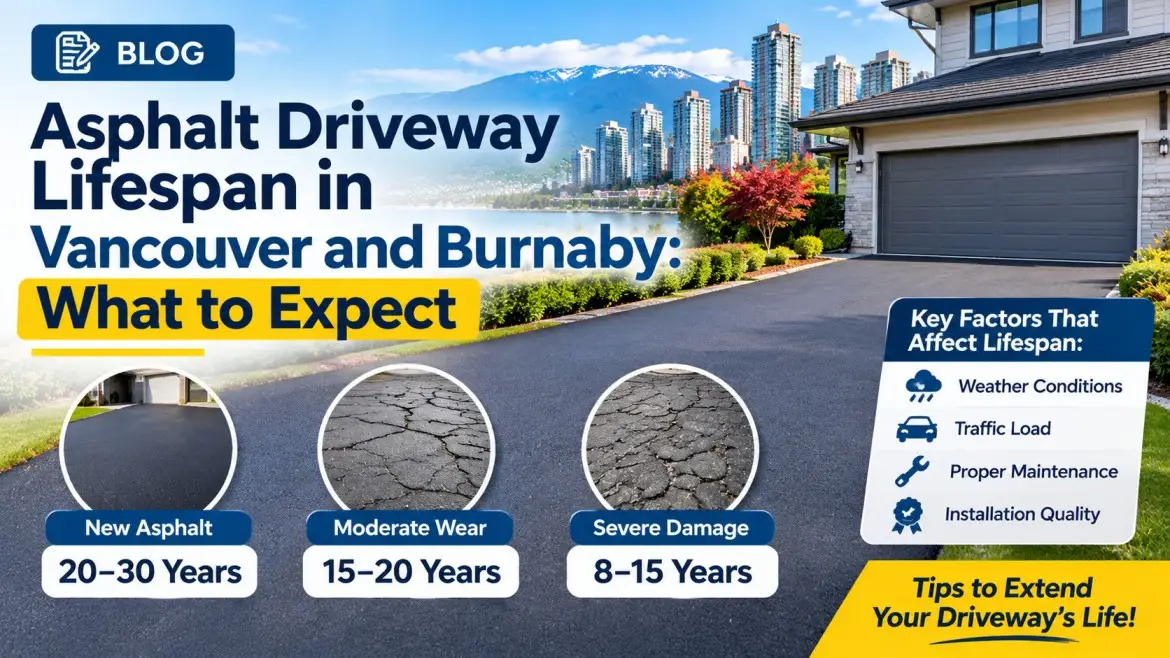
A well-built asphalt driveway in Vancouver or Burnaby typically lasts 15 to 20 years. Where it lands in that range depends mostly on what you can’t see: the gravel base, how well water drains away, and whether the surface is sealcoated every two to three years and cracks are sealed before the rainy season.
Some driveways wear out well before 15 years, and some keep going past 20. The difference is rarely the asphalt itself. This guide walks through what happens to a driveway as it ages, what speeds that up on Lower Mainland properties, and how to tell when patching stops making sense.
The life of an asphalt driveway, stage by stage
Asphalt doesn’t fail overnight. It goes through fairly predictable stages, and each one has a job attached to it. The table below is a practical guide, not a guarantee. A driveway on soft, wet ground or under heavy trucks can move through these stages faster.
| Age | What you’ll usually see | What to do |
|---|---|---|
| First year | Surface is still slightly soft; tire marks and scuffs appear on hot days | Wait 24 to 48 hours before driving on it; avoid sharp turns on the spot and parking in exactly the same place every day |
| Years 1–5 | Colour fades from black to grey; first hairline cracks may show | First sealcoat; seal any small cracks before fall rain |
| Years 5–10 | More hairline cracks, small chips at edges, stains from oil | Sealcoat every 2–3 years; fill cracks each summer; patch small damaged spots |
| Years 10–15 | Wider cracks, some loose stones on the surface, low spots that hold water | Keep sealing; repair sections; look at drainage; ask whether resurfacing is an option |
| Years 15–20 and beyond | Cracking spreads, edges crumble, patches stop holding | Have the base checked; plan for resurfacing if the base is sound or replacement if it isn’t |
If you have a brand-new driveway, our guide to caring for a newly paved driveway covers the first months in more detail.
Why some Lower Mainland driveways wear out early
Asphalt is flexible and handles our mild winters well. What shortens its life here is almost always water and what sits under the surface.
The good news is that most of these causes are things you can see coming and plan for. A driveway rarely fails because of one thing. It’s usually a mix: a thin base, a slope that sends water the wrong way, and a few years of skipped sealcoating. Fix one or two of those and the driveway lasts noticeably longer. Here are the main culprits on Vancouver and Burnaby properties.
Rain that has nowhere to go
Metro Vancouver gets long, wet months. When water soaks through cracks and reaches the gravel base, the base softens. Cars then push the softened area down, and the surface cracks in a pattern that looks like alligator skin. Once that starts, it spreads.
Puddles that stay for hours after rain are a warning sign. Fixing the slope, adding a drain or connecting to a catch basin often does more for a driveway’s lifespan than any coating. On larger sites, drainage improvements are usually part of the job.
A base that was built too thin
The compacted gravel under the asphalt carries the weight. If it was too thin, poorly compacted or laid on soft clay, the driveway will settle and crack no matter how good the top layer looks. This is the part of the job that cheap quotes most often cut back, and it’s why two driveways paved the same year can age very differently.
Shade, moss and needles
Driveways under cedars and firs stay damp longer and collect needles and leaves. Moss holds water against the surface, and debris blocks drains. A regular sweep and keeping gutters and drains clear make a real difference.
Tree roots
Mature street and yard trees push up and crack asphalt from below. It’s common in older neighbourhoods where trees were planted long before the driveway was paved.
Heavy loads and oil
Moving trucks, RVs, trailers and construction equipment can leave ruts, especially on warm days. Oil and fuel leaks soften asphalt over time. Clean spills quickly and try not to park heavy vehicles in the same spot every day.
Salt and winter shovelling
Our winters are mild, but de-icers and metal shovel edges still wear the surface. Use a plastic shovel blade or a rubber edge, and don’t chip at ice.
Vancouver and Burnaby: what your location means for your driveway
Low, wet ground in south Burnaby
Properties near Big Bend and the Fraser River sit on low ground that stays wet for much of the year. Here, the base and the drainage decide the lifespan. A driveway built with a thin base on soft ground can start sinking within a few years.
Slopes on Capitol Hill and Burnaby Mountain
On steep driveways, water runs fast and carries fine material away from the edges. Strong edges and proper grading matter. Burnaby also limits driveway grades to 15% inside the lot, so very steep sites may need regrading before they’re paved. See paving and concrete in Burnaby for local details.
Mature trees in Kitsilano, Dunbar and East Vancouver
Many older Vancouver streets have large trees close to driveways. Roots and falling leaves are the two things to watch. A root barrier or a slightly different driveway layout can be worth discussing before you repave.
Lane-access parking pads
Many Vancouver homes park off the lane. Lane pads need careful grading so water drains away from the garage and the lane, not into the base. Learn more on our Vancouver paving and concrete page.
Asphalt vs concrete: which lasts longer?
Concrete usually lasts longer. A concrete driveway can go 30 years or more, against 15 to 20 for asphalt. But concrete costs more up front, takes longer to cure and is harder to patch so the repair blends in.
Asphalt’s advantages are a lower installation price, a quick turnaround (most residential driveways take two to three days) and easy repairs. See how we build new asphalt driveways for Lower Mainland homes. For many Lower Mainland homes, a well-built asphalt driveway that is sealed on schedule is the better value. You can compare prices in our driveway cost guide for Vancouver and Burnaby.
Signs your asphalt driveway is near the end of its life
A few cracks don’t mean a driveway is finished. These signs, especially in combination, usually do:
- Alligator cracking. A web of connected cracks means the base underneath has weakened.
- Sinking or dips. Areas that have dropped and hold water point to a failed base.
- Potholes that keep coming back. If patches keep failing in the same spot, the problem is underneath.
- Standing water after rain. Water that sits on the surface keeps softening the base.
- Crumbling edges. Edges that break away show the driveway has lost its support at the sides.
- Loose stones everywhere. When the surface keeps shedding stones, the asphalt itself is worn out.
Repair, resurface or replace?
If cracks are narrow and the driveway is still level, driveway repair and resurfacing can add years at a fraction of the cost of a new driveway. If the base has failed, resurfacing over it is a short-lived fix; the old cracks come back through the new layer. In that case, asphalt driveway replacement is the lasting answer.
Our post on when to repair your driveway and when to replace it walks through the decision in more detail.
A simple maintenance plan that adds years
You don’t need to do much, but timing matters in our climate.
- After paving: stay off the new asphalt for 24 to 48 hours, and avoid heavy loads and sharp turns for the first while.
- Every year in late summer: walk the driveway, fill new cracks and clear drains before the fall rain starts.
- Every two to three years: sealcoat the surface in warm, dry weather.
- Every fall: clear leaves, needles and moss so water drains away.
- Every winter: use a plastic shovel or rubber edge and go easy on de-icers.
- Whenever a puddle lingers: find out why, because standing water is the start of most driveway failures.
What upkeep costs
According to the HomeStars Vancouver paving contractor cost guide, asphalt sealing runs about $0.95 to $1.85 per square foot, and crack or pothole repair about $12 to $25 per square foot of repair. Spending a little every couple of years is far cheaper than replacing a driveway early.
If you’re planning new work, May to September is the best paving weather in the Lower Mainland, and those dates book up first.
Frequently asked questions
How long does an asphalt driveway last in Vancouver?
A well-built asphalt driveway in Vancouver typically lasts 15 to 20 years. The base, drainage and maintenance decide where it lands in that range. Driveways on soft, wet ground or under heavy vehicles can wear out sooner, while a sound base and regular sealcoating help a driveway reach the top of the range.
How often should an asphalt driveway be sealcoated?
Sealcoating every two to three years is a good schedule for most Lower Mainland driveways. Apply it in warm, dry weather so it can cure properly, and fill any cracks first. Sealcoating protects the surface from water, sun and oil, but it won’t fix a driveway whose base has already failed.
What is the most common reason asphalt driveways fail early here?
Water. Rain that soaks through cracks or pools on the surface softens the gravel base, and cars then push the weak area down. Poor drainage and a base that was built too thin are the two most common causes of early failure in Vancouver and Burnaby, more than the asphalt itself.
Can an old asphalt driveway be resurfaced instead of replaced?
Yes, if the base is still sound. When cracks are narrow and the driveway is level, a new asphalt layer can add years of life for much less than replacement. If the driveway has sunk, has alligator cracking or holds water, resurfacing won’t last and full replacement is the better value.
When is the right time to replace an asphalt driveway?
Plan for replacement when patches keep failing, alligator cracking spreads, areas sink or hold water, or edges crumble away. These usually show up after 15 to 20 years, sooner on a weak base. Book an inspection in winter or early spring so the work can be scheduled for the May to September paving season.
Not sure how much life your driveway has left?
Bortolo and Sons Paving Co. Ltd. is a family-owned paving contractor based at 7310 Union St in Burnaby, building and repairing Lower Mainland driveways since 1974. If you’d like an honest opinion on whether your driveway needs repair, resurfacing or replacement, request a free, no-obligation estimate and we’ll check the base and drainage on site.