
How Paving Contractors Simplify Residential and Commercial Projects
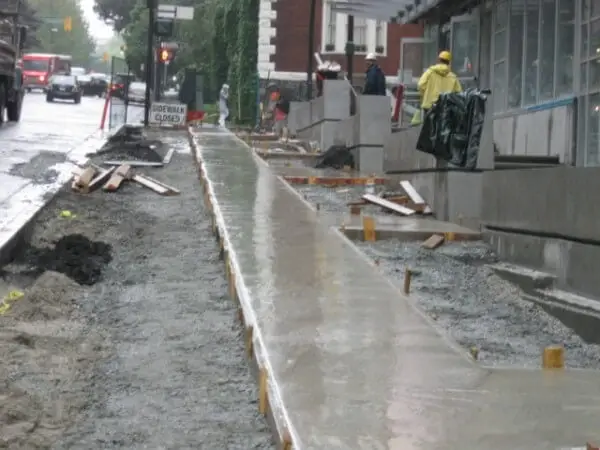
Over 50% of contractors report schedule delays caused by labor shortages and supply chain variability, and sitework is often where those delays start compounding (AGC, 2024). In 2026, owners and property managers are also navigating tighter storm water rules, more extreme weather, and rising expectations for warranty-backed performance. That is why choosing the right paving contractors matters more now than it did even a few years ago. This guide breaks down how full-service paving teams simplify both residential and commercial paving by consolidating design input, permitting coordination, materials, crews, and quality control under one plan. You will learn what “full-service” really includes, how project management reduces cost and risk, what trends are shaping concrete paving and asphalt repair in 2026, and how to evaluate driveway services and commercial paving bids with confidence. What “full-service” paving contractors actually do (and why it reduces risk) Full-service paving contractors handle the project end-to-end, rather than completing only one slice like milling, striping, or patching. The biggest benefit is not convenience. It is accountability: one party owns sequencing, quality, safety, and outcomes. Why consolidation prevents the most expensive failures Most pavement failures trace back to water and base problems, not surface appearance. When one contractor coordinates base prep, drainage, and surfacing, they can enforce compaction targets, protect grades, and avoid “handoff gaps” that lead to rutting, settlement, and premature cracking. Improper drainage is one of the most cited root causes of pavement distress, because trapped water weakens base layers and accelerates freeze-thaw damage (FHWA, 2023). Full-service project management aligns the drainage plan with the paving plan, so the finished surface sheds water the way it is supposed to. How project management keeps paving projects on time and on budget Project management is the hidden engine behind reliable outcomes, especially for commercial paving where closures, tenant access, and safety must be orchestrated. Choosing the right paving contractor also plays a major role in keeping projects on schedule and avoiding costly mistakes. In 2026, owners also expect tighter scheduling, better documentation, and fewer surprises, driven by higher financing costs and less tolerance for downtime. Sequencing that prevents rework and downtime Full-service paving contractors typically build a critical path schedule that includes demo, subgrade corrections, base placement, paving days, cure times, and striping. The goal is to eliminate “dead days,” where a site sits open waiting for the next trade. That matters because every extra mobilization adds cost and risk. Budget control through fewer “unknowns” When scopes are split among multiple vendors, change orders multiply because no one owns the interfaces. Full-service teams reduce that by validating grades, drainage tie-ins, and quantities early, then locking decisions before equipment hits the site. Material and labor costs remain elevated versus pre-2020 baselines, and volatility still affects asphalt and cement pricing in many regions (BLS, 2025). Strong project management mitigates the impact by confirming mix availability, booking crews earlier, and choosing phasing that minimizes remobilization. Residential vs. commercial paving: what changes and what stays the same Residential and commercial paving share the same physics: base strength, drainage, compaction, and proper thickness determine performance. What changes is load intensity, liability exposure, and operational constraints. Driveway services: priorities for homeowners For driveway services, the biggest concerns are appearance, longevity, water control near foundations, and a smooth transition at sidewalks or garage slabs. A full-service contractor will check that slopes move water away from structures, and that edges are reinforced to resist raveling. Commercial paving: priorities for owners and facility managers Commercial paving must hold up to heavier loads, frequent turning, and concentrated stresses at dumpster pads, loading docks, and entrances. It also has to meet compliance requirements. For example, restriping must follow ADA access aisle standards, and slopes must control ponding that can become slip hazards. Parking lot condition affects perception and leasing outcomes. Retail and multifamily operators increasingly treat lot upgrades as part of asset repositioning, not just maintenance, because curb appeal and safety complaints directly influence occupancy. Concrete paving vs. asphalt: choosing the right system (with 2026 decision criteria) Concrete paving and asphalt both have valid use cases. The “best” choice depends on loading, climate, downtime tolerance, and life-cycle cost, not just upfront price. Custom concrete driveways are often chosen for their durability, design flexibility, and long-term performance in residential settings. In 2026, many owners also consider heat-island impacts and maintenance staffing, because routine crack sealing and patch cycles require consistent follow-through. Decision factor Asphalt (common choice) Concrete paving (common choice) Downtime and reopening Often reopen within 24 to 48 hours depending on lift thickness and temperatures Often needs multiple days of curing for traffic, longer for heavy loads Best for Large parking areas, phased commercial paving, budget-sensitive overlays Loading docks, dumpster pads, high-turn areas, fuel exposure zones Maintenance style Crack sealing, sealcoating, periodic overlays, asphalt repair patches Joint maintenance, occasional panel replacement, sealing where needed Heat and surface performance Darker surface can run hotter in summer conditions Lighter surface often reduces surface temperatures relative to asphalt 2026 best practice: hybrid designs A growing best practice is combining systems. Use asphalt for general parking fields, and concrete paving where stress is highest. This reduces rutting at entrances and loading zones while controlling total cost. Hybrid layouts often reduce recurring asphalt repair in high-stress zones because concrete resists deformation from slow, heavy turning movements better than thin asphalt sections. What’s changed in 2026: trends shaping paving contractors, materials, and expectations The paving industry in 2026 is being reshaped by climate resilience needs, tighter environmental requirements, and technology that improves consistency. These trends directly impact how full-service paving contractors scope work and manage risk. Trend 1: climate-resilient design is moving from “nice to have” to standard Heavier rain events and faster freeze-thaw swings are pushing owners to invest more in drainage, base strength, and water management details. Pavement sections are increasingly designed around runoff control, not just surface thickness. Extreme precipitation events have increased in frequency in many U.S. regions over recent decades, which increases the importance of drainage and base